
Ether.fi Cash Review
Crypto Card Review
ETH holders and DeFi natives who prioritise non-custodial control, tax-efficient spending, and ETHFI cashback.
Overview
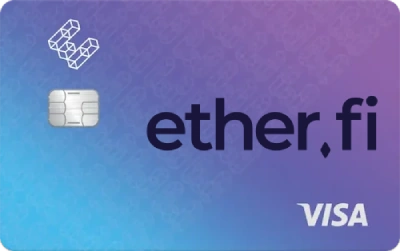
Ether.fi Cash is a non-custodial DeFi crypto card built for ETH holders and DeFi participants who want to spend without selling their assets. Issued as a Visa Signature credit card with free top-ups, zero spending fees, and 3% cashback in ETHFI on the first $2,000 of monthly spend, it offers one of the most cost-efficient fee structures in this comparison — and one of the few cards where your assets continue generating yield while you spend.
The card’s defining feature is Borrow Mode: rather than selling ETH to fund your card balance, you borrow against your staked ETH position. Your wETH continues compounding while the borrowed amount covers your spending — a structure designed specifically for long-term ETH holders who do not want to trigger a taxable disposal event every time they make a purchase.
A $50 physical card fee on the free Core tier (Luxe and above include free physical cards), Apple Pay and Google Pay support, and spending limits you set yourself ($50,000 a day per card by default) round out a package aimed squarely at DeFi-native users. The card is available in the UK and, in the US, in 30 states plus DC.
Best suited for: ETH holders and DeFi participants who want to spend against their ETH position without selling, while earning ETHFI cashback on every purchase.
Why Consider This Card?
Best For
ETH holders and DeFi natives who prioritise non-custodial control, tax-efficient spending, and ETHFI cashback.
Key Advantage
Non-custodial — funds stay in your own Gnosis Safe multi-sig wallet
Things to Know
US availability limited to 30 states plus DC

Ether.fi Cash is a non-custodial DeFi crypto card built for ETH holders and DeFi participants who want to spend without selling their assets. Issued as a Visa Signature credit card with free top-ups, zero spending fees, and 3% cashback in ETHFI on the first $2,000 of monthly spend, it offers one of the most cost-efficient fee structures in this comparison — and one of the few cards where your assets continue generating yield while you spend.
The card’s defining feature is Borrow Mode: rather than selling ETH to fund your card balance, you borrow against your staked ETH position. Your wETH continues compounding while the borrowed amount covers your spending — a structure designed specifically for long-term ETH holders who do not want to trigger a taxable disposal event every time they make a purchase.
A $50 physical card fee on the free Core tier (Luxe and above include free physical cards), Apple Pay and Google Pay support, and spending limits you set yourself ($50,000 a day per card by default) round out a package aimed squarely at DeFi-native users. The card is available in the UK and, in the US, in 30 states plus DC.
Best suited for: ETH holders and DeFi participants who want to spend against their ETH position without selling, while earning ETHFI cashback on every purchase.
PART 2 — AFTER PROS/CONS
(Paste into the main body content area after the pros/cons table)
Borrow Mode: The Feature That Sets Ether.fi Apart
Every other card in this comparison operates on the same fundamental model: deposit crypto, convert to spendable balance, spend. The conversion is the trigger — and in many jurisdictions, converting crypto to fiat is a taxable disposal event, meaning every top-up generates a potential tax liability.
Ether.fi Cash’s Borrow Mode changes this. Instead of selling your ETH or wETH to fund the card, you borrow against your staked ETH position. Your underlying wETH stays in your wallet, continues compounding staking rewards, and is never sold. The borrowed amount — typically a stablecoin — is used to fund your card balance for spending.
The practical implications are significant for long-term ETH holders:
No forced selling. You access spending power without triggering a disposal of your ETH position. In jurisdictions where crypto-to-fiat conversion is a taxable event, this is a material tax efficiency advantage.
Continued yield accrual. Your staked wETH keeps earning while you spend against it. The effective cost of accessing liquidity is the borrowing rate minus the staking yield — which in favourable conditions can approach zero or even be net positive.
Position preservation. ETH holders who are long-term bullish on ETH price can access spending liquidity without reducing their exposure. If ETH appreciates during the borrowing period, the full upside accrues to your still-intact position.
Borrow Mode is not for everyone — it requires understanding collateralisation ratios, liquidation risk if ETH price drops significantly, and active position management. But for DeFi-native users already comfortable with these mechanics, it is a genuinely differentiated feature that no other card in this comparison offers.
ETHFI Cashback: Earning Rewards on Your Spending
Ether.fi Cash pays cashback in ETHFI, locked for 7 days. On the free Core tier you earn 3% on the first $2,000 of spend each month, then 1%, then 0.5%; Luxe pays 3% up to $10,000 a month, Pinnacle 3% up to $50,000 a month, and VIP 4%.
Spending in EUR earns in lower bands — confirm your current rates in the Ether.fi app.
For context across the category:
- Crypto.com offers up to 4.5% cashback in CRO, but the top tier requires a $500,000 12-month CRO stake — and CRO carries its own price risk
- RedotPay offers cashback only with its paid Pro plan: 3% on Apple Pay and Google Pay payments, capped at 18 USDs per month
- Bybit offers 2–10%, with the tier set by monthly card spend or VIP level and the base tier capped at $5 per month
Ether.fi’s 3% Core-tier cashback — available without staking a platform token and without exchange account requirements — is the most accessible high-quality cashback structure in this comparison for non-platform users.
The one consideration: cashback is paid in ETHFI, not USD, and is locked for 7 days. If the ETHFI price declines, the dollar value of your cashback declines with it. For users who want cashback in a stable currency, this introduces a variable they need to be comfortable with.
Fee Structure: The Cleanest in the Category
Ether.fi Cash charges no top-up fee and no spending fee. The only recurring fee is an FX charge on purchases in currencies other than USD or EUR — 0.5% on the free Core tier, 0.25% on Luxe and 0% on Pinnacle and VIP — and the first 10 ATM withdrawals each month are free on Core and Luxe. There is no annual fee on Core, no monthly fee, and no inactivity fee. The virtual card is free on Core, except in 12 regions — Argentina, Bangladesh, Bolivia, Colombia, Ecuador, Malaysia, Mexico, Nigeria, Peru, Philippines, South Africa and Thailand — where it costs $10.
This makes Ether.fi’s all-in cost the lowest of any card in this comparison for regular spenders:
| Transaction type | Ether.fi cost | Tevau cost | Crypto.com cost |
|---|---|---|---|
| Top-up $500 | $0 | $5 (1%) | $5 (1%) |
| Domestic spend $500 | $0 | $2.70 (0.2 USD + 0.5%) | $0 |
| Foreign currency spend $500 | $2.50 (0.5% FX, Core) | $6 (1.2% FX) | Up to $15 (3% FX) |
| Total (foreign spend) | $2.50 | $11 | $20 |
For a user spending $2,000 per month in foreign currencies, Ether.fi’s 0.5% Core-tier FX fee costs $10/month versus up to $60/month on Crypto.com’s 3% rate — a $600 annual difference before cashback is factored in. Add 3% Core-tier cashback on that $2,000 spend ($60/month in ETHFI) and Ether.fi produces a net positive return on spending for active users.
Spending Limits and Tiers
Ether.fi sets no maximum spending limit — you set your own limits in the app. New cards start with these defaults:
| Default limit | Daily limit | Monthly limit |
|---|---|---|
| Card spending (per card) | $50,000 | Not published |
| Vault | $100,000 | $1,000,000 |
The $50,000 default daily card limit is significantly higher than Bybit’s €5,000–€15,000 (EEA) and Crypto.com’s $10,000–$25,000 (US card), and you can change it in the app. For truly high-volume requirements, compare RedotPay’s $1,000,000 daily limit and Tevau’s $3,000,000 monthly limit.
Geographic Coverage and UK Expansion
Ether.fi Cash is available internationally, including in the UK — one of the largest crypto user bases in Europe — and in 30 US states plus DC.
For Southeast Asian, European, and Latin American users, the card is available now. In the US, coverage is limited to 30 states plus DC, reflecting the regulatory complexity of crypto card programmes in that market.
Who Should NOT Get Ether.fi Cash
You are not an ETH holder or DeFi participant. Ether.fi’s defining feature, Borrow Mode, is designed around ETH as the primary asset. Users who hold primarily USDT, BTC, or other assets will not benefit from the card’s defining capabilities. Cards like Tevau or KazePay are better fits for stablecoin-primary users.
You are not comfortable with DeFi mechanics. Borrow Mode requires understanding collateral ratios, liquidation thresholds, and position management. If these concepts are unfamiliar, the simpler custodial card model is less risky.
You want cashback in a stable currency. ETHFI cashback is subject to ETHFI price movements. Users who want USD-equivalent cashback should consider RedotPay with its paid Pro plan (cashback in USDs) or Bybit for fiat-denominated rewards.
You are based in a US state it does not cover. In the US, Ether.fi Cash is available in only 30 states plus DC.
You need ATM access very often. Core and Luxe include 10 free ATM withdrawals per month; unlimited free withdrawals need Pinnacle or above. Cards with a free monthly ATM amount — like Crypto.com or Bybit — are alternatives for cash-dependent users.
How Ether.fi Cash Compares to Similar Cards
| Ether.fi | SafePal | Crypto.com | |
|---|---|---|---|
| Top-up fee | Free | 0.4% | 1% (debit card, US) |
| Spending fee | Free | Free | Free |
| FX fee | 0.5% (Core) | 1% | Up to 3% |
| Daily limit | $50,000 default (adjustable) | €5,000 (€1,600 contactless) | $10,000–$25,000 (US card) |
| Custody model | Non-custodial | Non-custodial | Custodial |
| Cashback | 3% ETHFI (Core) | None | Up to 4.5% CRO |
| Stake required | No | No | Stake or subscription (for cashback) |
| Physical card | $50 (Core) | None (virtual only) | S$4.99 / €4.99 (Midnight Blue) |
| Apple Pay | ✅ | ✅ | ✅ |
Ether.fi and SafePal are the two non-custodial cards in this comparison. Ether.fi adds cashback and free top-ups, with a $50 physical card fee on the free Core tier. SafePal offers the lowest top-up fee and Swiss banking infrastructure but no cashback. For reward-focused users, see our Best Crypto Cards for Rewards guide.
How to Get Started with Ether.fi Cash
- Download the Ether.fi app on iOS or Android
- Create an account and complete KYC verification
- Connect your self-custody wallet holding ETH, wETH, USDC, USDT, or BTC
- Choose your spending mode — direct top-up or Borrow Mode against your staked ETH
- Fund your card balance via your connected wallet (no top-up fee)
- Add to Apple Pay or Google Pay immediately
- Order the physical card if needed ($50 on Core; Luxe and above include free physical cards)
For Borrow Mode, additional setup is required to establish your collateral position within the Ether.fi protocol — detailed instructions are available in the Ether.fi app.
Pricing & Fees
| Virtual Card Cost | Free on Core; $10 in Argentina, Bangladesh, Bolivia, Colombia, Ecuador, Malaysia, Mexico, Nigeria, Peru, Philippines, South Africa, Thailand |
|---|---|
| Physical Card Cost | $50 on Core; free physical cards: 1 on Luxe, 2 on Pinnacle and VIP ($100 each after that) |
| Annual Fee | Free |
| Top-up Fee | Free |
| Minimum Top-up | $10 (initial deposit before verification) |
| FX Fee | 0.5% (Core) / 0.25% (Luxe) / 0% (Pinnacle+) |
| ATM Withdrawal Fee | 10 free withdrawals/month (Core, Luxe); unlimited free on Pinnacle+ |
| Crypto Conversion Fee | Unknown |
| Card Replacement Fee | $20 |
| Inactivity Fee | Free |
| Transaction Fee | Free |
| Refund Fee | Free |
Limits
| Per-Transaction Limit | Not published (within your card's daily limit) |
|---|---|
| Daily Spending Limit | $50,000 by default (you can change it) |
| Monthly Spending Limit | $1,000,000 vault limit by default (you can change it) |
| ATM Daily Limit | Up to $5,000 per withdrawal; $25,000 per 24 hours |
| ATM Monthly Limit | Not published; 10 free withdrawals/month on Core and Luxe |
| Top-up Min. Limit | $10 (initial deposit before verification) |
| Top-up Max. Limit | Unlimited |
Card Features
| Virtual Card | Yes |
|---|---|
| Physical Card | Yes |
| Apple Pay | Yes |
| Google Pay | Yes |
| ATM Withdrawal | Yes |
| Rewards Program | Yes — 3% cashback on the first $2,000/month (Core), then 1%, then 0.5%; up to 4% (VIP) |
| Cashback Token | ETHFI (7-day lock) |
| Special Benefit | Borrow Mode (spend against ETH collateral without selling); Visa Signature benefits (purchase protection, extended warranty, rental insurance) |
| Subscription Rebates | No |
| Earning | Yes — staking and managed vaults (variable yield) |
| Mobile App Controls | Yes (freeze, transaction history, spending controls, multi-member roles) |
| Security Controls | Gnosis Safe multi-sig, non-custodial architecture, real-time notifications |
Customer Care
| Support Channels | In-app help, email, Help Center (help.ether.fi) |
|---|---|
| Response Time | Good — Responsive team; priority support for higher tiers |
| Languages Supported | English, Spanish, Portuguese, Traditional Chinese (help center) |
| Knowledge Base | Yes — help.ether.fi |
| Refund Handling | Cashback reversed on refunded transactions; standard Visa dispute process applies |
| User Reviews | Very positive among early adopters |
| Trust Score | ~3.8/5 (early adopter reviews) |
Order Now
| Card Type | Virtual & Physical ($50 physical card fee on Core; Luxe includes one free) |
|---|---|
| Min Top-up | $10 (initial deposit before verification) |
| Approval Time | Virtual: Instant; Physical KYC approval: Fast (hours to 1 day) |
| Bonus Offer | Various Seasonal Promotion |
| Card Delivery Time | Virtual: Instant; Physical: ~7 days international shipping (user reports) |
| Region Warning | US: 30 states + DC only; virtual card costs $10 in 12 regions (incl. Malaysia, Thailand); Borrow Mode has liquidation risk |
Pros & Cons
Pros
- Non-custodial — funds stay in your own Gnosis Safe multi-sig wallet
- 3% cashback in ETHFI on the first $2,000 of monthly spend (free Core tier)
- Borrow Mode: spend without selling crypto (tax-efficient)
- No annual fee on the free Core tier
- Earn a variable yield on idle balances through ether.fi's staking and managed vaults
- Apple Pay and Google Pay supported
- Tax-efficient for long-term holders (borrowing not a taxable event)
- Visa Signature benefits: purchase protection, extended warranty, rental insurance
Cons
- US availability limited to 30 states plus DC
- Borrow Mode carries liquidation risk if collateral value drops
- $50 physical card fee on the free Core tier (Luxe includes one free physical card)
- 0.5% FX fee on currencies other than USD or EUR (free Core tier)
- Only 10 free ATM withdrawals per month on Core and Luxe
- DeFi complexity may not suit non-crypto-native users
- Newer product with shorter track record than established competitors
- Borrowing rates revert to AAVE market rates when promo ends (2–10% APY)
Final Verdict
Ether.fi Cash is the most technically sophisticated card in this comparison — and for the right user, the most financially efficient. Free top-ups, zero spending fees, a 0.5% FX fee on the free Core tier, and 3% ETHFI cashback on the first $2,000 of monthly spend combine into a structure where active spenders generate a net positive return on their card use before any asset appreciation is counted. No other card in this category achieves that combination without a staking requirement or platform dependency.
The Borrow Mode feature is genuinely differentiated. For ETH holders who want spending liquidity without forced selling, without triggering tax events, and without reducing their ETH exposure, it solves a problem that no competing card addresses. It is the reason Ether.fi Cash is particularly compelling for DeFi-native users who are already managing collateral positions on other protocols.
The limitations are consistent and clearly scoped: the card is built for ETH holders, runs best when you are comfortable with DeFi mechanics, and in the US is available in only 30 states plus DC. For users outside that profile, the card’s advantages do not translate cleanly. USDT-primary users are better served by Tevau or KazePay. Users who want cashback without ETH exposure will find Crypto.com’s CRO cashback or RedotPay’s paid Pro plan (cashback in USDs) more suitable.
For ETH holders who spend regularly, Ether.fi Cash is the strongest all-round option in the category in 2026. The fee structure, cashback quality, non-custodial model, and Borrow Mode capability combine into a package that is difficult to match.
Apply via UCardCrypto & Get Your Reward
Start your Ether.fi Cash application through UCardCrypto and unlock a guaranteed UCard reward for completing the eligible steps.
Compare with another card
User Reviews
No user reviews yet. Used this card? Your review helps other readers.
Write a review
Frequently Asked Questions
What makes the Ether.fi Cash card different from other crypto cards?
Ether.fi Cash lets you spend directly from your self-custodied ETH and liquid staking positions without giving up yield or moving assets to a centralised platform.
Do I need to unstake my ETH to use the Ether.fi card?
No. The Ether.fi Cash card lets you spend against your staked ETH position without unstaking, preserving your yield while enabling everyday spending.
What cryptocurrencies does Ether.fi Cash support?
Ether.fi Cash primarily supports ETH, USDC, USDT and BTC. It is most relevant for users with significant ETH or liquid staking token positions.
Is the Ether.fi Cash card non-custodial?
Yes. Ether.fi Cash maintains a non-custodial approach — your assets remain under your control until you spend, consistent with the broader Ether.fi protocol philosophy.
Who is the Ether.fi Cash card best suited for?
Ether.fi Cash is best suited for DeFi-native ETH holders who want to spend crypto in daily life without exiting their staking position or moving funds to a centralised exchange.