

Pago de retenciones Revisar
Análisis de la tarjeta de criptomonedas
Para grandes compradores y comerciantes que necesitan los límites de transacción más altos con Apple Pay + cobertura de tarjetas físicas en más de 100 países.
Descripción general
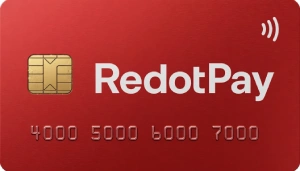
RedotPay es una tarjeta de débito de criptomonedas con sede en Hong Kong, diseñada para usuarios con alto volumen de gasto. Funciona en la red Visa, admite más de 20 criptomonedas para recargas y ofrece un límite de gasto diario de $1.000.000 con verificación de identidad completa (KYC), el límite verificado más alto de todas las tarjetas en esta comparativa después de Tevau. Con cobertura en 158 países y aceptación de activos como BTC, ETH, USDT, USDC, SOL, BNB, XRP, TON, TRX y SUI, es una de las tarjetas de gasto multiactivos más versátiles disponibles para usuarios de criptomonedas fuera de EE. UU.
La tarjeta cobra una comisión de recarga de 1% y una comisión por gasto de 1%, además de una comisión por conversión de divisas de 1,2% para transacciones en diferentes monedas. Si bien la estructura de comisiones no es la más económica, especialmente para los usuarios que desean cero comisiones por gasto, la combinación de límites altos, amplia compatibilidad con criptomonedas y compatibilidad con Apple Pay y Google Pay la convierte en una excelente opción para quienes mueven cantidades importantes con regularidad.
Se puede obtener una tarjeta física por $100 y se ofrece un bono de bienvenida de $5 a los nuevos usuarios. Los usuarios de la tarjeta Solana pueden obtener un reembolso de hasta 3%, y se requiere la verificación completa de KYC y AML para todas las cuentas.
Ideal para: usuarios que realizan grandes transacciones con criptomonedas, poseen una amplia gama de activos y necesitan una sola tarjeta que gestione grandes transacciones diarias en 158 países.
¿Por qué considerar esta tarjeta?
Lo mejor para
Para grandes compradores y comerciantes que necesitan los límites de transacción más altos con Apple Pay + cobertura de tarjetas físicas en más de 100 países.
Ventaja clave
Límites líderes en la industria de $100K por transacción y $1M diarios.
Cosas que debes saber
Tarifa de emisión de tarjeta virtual $10 + tarjeta física $100
¿Para quién está realmente diseñado RedotPay?
Las decisiones de diseño de RedotPay dejan claro que esta tarjeta está dirigida a un tipo específico de usuario: alguien que posee varias criptomonedas, gasta grandes cantidades con regularidad y necesita una tarjeta que le permita seguir el ritmo sin alcanzar un límite diario.
El límite de gasto diario y mensual de $1.000.000 es la señal más evidente. La mayoría de las tarjetas de esta categoría limitan a los usuarios estándar a entre 10.000 y $50.000 al día, requiriendo verificación premium o staking para desbloquear importes mayores. El límite de RedotPay está disponible con la verificación KYC completa estándar: no se requiere staking de tokens, cuenta de intercambio ni suscripción por niveles.
La compatibilidad con más de 20 criptomonedas para recargas es la segunda señal. Además de las habituales USDT y USDC, RedotPay acepta BTC, ETH, SOL, BNB, XRP, TON, TRX, SUI y Sonic, cubriendo así las principales criptomonedas de la mayoría de los traders y participantes de DeFi. Esto significa menos pasos de conversión antes de recargar la tarjeta, algo fundamental cuando los activos se encuentran distribuidos en diferentes redes y monederos.
Para los usuarios cuyo portafolio va más allá de las stablecoins, RedotPay elimina la fricción de convertir todo a USDT antes de gastar, un paso que las tarjetas como Tevau y KazePay lo requieren ya que solo aceptan USDT y USDC para recargas.
Comprender la estructura de tarifas
RedotPay cobra comisiones en dos momentos: una comisión de recarga de 1% al depositar criptomonedas y una comisión de gasto de 1% por cada transacción. La comisión por conversión de divisas es de 1,2% para compras en diferentes monedas.
Para un gasto de $500 en moneda extranjera: $5 de comisión por recarga + $5 de comisión por gasto + $6 de comisión por cambio de divisa = $16 en total, o un coste efectivo de 3,2%. Esto es más alto que las tarjetas sin comisión por gasto como Tevau (2,2% en total para la misma transacción), pero comparable a PokePay con una estructura de acumulación similar.
La pregunta es si la prima se justifica por las capacidades de RedotPay. Para un usuario que necesita límites diarios de $1,000,000 y soporte para recargas de múltiples activos, la respuesta suele ser sí: esas características no están disponibles a un precio más bajo. Para un usuario que solo tiene USDT y gasta menos de $10,000 por día, una tarjeta sin comisiones por gasto como Tevau es la opción más rentable.
El bono de registro $5 compensa parcialmente el coste inicial para los nuevos usuarios, aunque se trata de un crédito único y no de un beneficio continuo.
Reembolso: La oportunidad que ofrece la tarjeta Solana
RedotPay ofrece hasta 3% de reembolso para los usuarios que opten por la variante de tarjeta Solana. Esta es una de las tasas de reembolso más competitivas de la categoría, comparable a Ether.fi Cash (2–3% de reembolso en wETH), mientras que Tevau actualmente no ofrece ningún programa de recompensas.
El reembolso de Solana está vinculado al uso de SOL como activo de recarga a través de la red Solana. Si posee SOL y se siente cómodo utilizando la red Solana para las transferencias, esta es una oportunidad real de obtener ganancias que modifica significativamente el cálculo del costo efectivo. Con un reembolso de 3% frente a un costo efectivo de comisión de 3,2%, el costo neto de gastar en RedotPay se acerca a cero para los usuarios de Solana.
Para los usuarios que no poseen una tarjeta SOL o que no utilizan la red Solana, el reembolso estándar no se aplica y la tarjeta compite únicamente en función de sus ventajas en cuanto a límite y soporte de activos.
Redes compatibles y flexibilidad en las recargas
RedotPay acepta recargas mediante ERC20, TRC20, BSC y Arbitrum, con soporte para redes adicionales en sus más de 20 activos compatibles. Esto ofrece una cobertura más amplia que la mayoría de las tarjetas de su categoría y abarca las principales redes utilizadas para transferencias de USDT a nivel mundial.
TRC20 (Tron) suele ser la red más barata y rápida para transferencias de USDT, y su compatibilidad con RedotPay permite a los usuarios recargar de forma eficiente sin pagar las elevadas comisiones de gas de Ethereum. Para los activos nativos de BNB y BSC, la compatibilidad con BSC elimina la necesidad de realizar un puente antes de depositar.
Conviene confirmar la disponibilidad específica de la red para cada activo en la aplicación RedotPay antes de realizar la transferencia, ya que la compatibilidad de la red puede variar según el activo y la región.
Cobertura geográfica y exclusiones
RedotPay está disponible en 158 países, una cobertura ligeramente inferior a la global que ofrecen Tevau y KazePay, pero lo suficientemente amplia como para cubrir la mayor parte del mundo fuera de las jurisdicciones sancionadas y fuertemente restringidas.
Entre las principales exclusiones se encuentran Estados Unidos, China continental y Singapur. Cabe destacar la exclusión de Singapur, especialmente para los usuarios del sudeste asiático: RedotPay no está disponible para los residentes de Singapur a pesar de su presencia regional y su sede en Hong Kong.
Para los usuarios de Malasia, Indonesia, Vietnam, Filipinas, Tailandia y la mayor parte de Europa y Latinoamérica, la tarjeta está disponible sin restricciones.
¿Quiénes NO deberían recibir el pago por reposición?
Quieres cero comisiones por gastos. La tarifa de gasto 1% de RedotPay se acumula sobre la tarifa de recarga 1%. Para los usuarios que priorizan la minimización de tarifas sobre el tamaño del límite, Tevau o KazePay Ofrecen cero comisiones por gastos con un proceso de incorporación comparable.
Usted reside en Singapur, Estados Unidos o China continental. RedotPay no está disponible para los residentes de estas regiones.
Solo debes mantener USDT y gastar menos de $50,000 por día. Si tus necesidades de recarga se limitan a USDT y tu volumen diario está muy por debajo del límite de RedotPay, la comisión adicional no se justifica. Tevau ofrece una experiencia más económica para quienes gastan USDT con un volumen estándar.
Quieres una tarjeta física barata. Con un precio de $100, la tarjeta física de RedotPay se sitúa en la gama media. Bybit La tarjeta física cuesta $5, lo que la hace significativamente más barata si el acceso mediante tarjeta física es su objetivo principal.
Necesitas la comisión por cambio de divisas más baja posible. Con una comisión de 1,2%, la tarifa de cambio de divisas de RedotPay es razonable, pero no la más baja. PokePay Cobran 1% por cambio de divisas, y Ether.fi también cobra 1%, lo que resulta ligeramente más económico para los usuarios que realizan muchas transacciones en diferentes divisas.
Comparación de RedotPay con tarjetas similares
| RedotPay | Tevau | KazePay | |
|---|---|---|---|
| Tarifa de recarga | 1% | ~1% | 1.8%–2.2% |
| Tarifa de gasto | 1% | Gratis | Gratis |
| comisión por cambio de divisas | 1.2% | 1.2% | 1%–3% |
| Límite diario | $1,000,000 | $3,000,000 | $50.000–$250.000 |
| Criptomonedas compatibles | 20+ | USDT, USDC solamente | USDT, USDC solamente |
| Costo de la tarjeta física | $100 | $100 | $100–$150 |
| Apple Pay | ✅ | ✅ | ✅ Solo virtual |
| Cashback | Hasta 3% (Solana) | Agujas | 2% (sin confirmar) |
La compatibilidad de RedotPay con más de 20 criptomonedas es su ventaja más clara sobre Tevau y KazePay, que solo aceptan stablecoins. Su límite diario es inferior al de Tevau ($3.000.000), pero superior al del nivel premium de KazePay ($250.000). Para una comparación completa de todas las tarjetas USDT, consulte nuestra Las mejores tarjetas de débito USDT guía.
Cómo empezar a usar RedotPay
- Descarga la aplicación RedotPay en iOS o Android.
- Regístrate con tu dirección de correo electrónico.
- Completar el proceso KYC completo: documento de identidad emitido por el gobierno, selfie y verificación AML (obligatorio para todas las cuentas).
- Seleccione la variante de tarjeta que prefiera (estándar o Solana cashback).
- Recarga con la criptomoneda que prefieras a través de ERC20, TRC20, BSC, Arbitrum u otras redes compatibles.
- Agrega tu tarjeta virtual a Apple Pay o Google Pay.
- Solicite una tarjeta física para $100 si la necesita; el plazo de entrega es de 7 a 21 días hábiles.
Nota: La verificación completa de KYC y AML es obligatoria para todas las cuentas de RedotPay, incluido el acceso a tarjetas virtuales. No existe una opción de tarjeta virtual con verificación mínima de KYC, como la que ofrecen algunos competidores.
Precios y tarifas
| Costo de la tarjeta virtual | $10 |
|---|---|
| Costo de la tarjeta física | $100 |
| Cuota anual | Gratis |
| Tarifa de recarga | 1% |
| Recarga mínima | $1 |
| Comisión por cambio de divisas | 1.2% |
| Comisión por retiro en cajero automático | 2% |
| Comisión por conversión de criptomonedas | 1% |
| Tarifa de reemplazo de tarjeta | Recomprar una nueva tarjeta |
| Tarifa por inactividad | Gratis |
| Comisión por transacción | 1% |
| Tarifa de reembolso | >€1 o 0,05%; $50 cargo por contracargo |
Límites
| Límite por transacción | $100,000 |
|---|---|
| Límite de gasto diario | $1,000,000 |
| Límite de gasto mensual | $1,000,000 |
| Límite diario del cajero automático | $3,750 |
| Límite mensual del cajero automático | $50,000 |
| Límite mínimo de recarga | $1 |
| Límite máximo de recarga | Ilimitado |
Características de la tarjeta
| Tarjeta virtual | Sí |
|---|---|
| Tarjeta física | Sí |
| Apple Pay | Sí |
| Google Pay | Sí |
| Retiro en cajero automático | Sí |
| Programa de recompensas | Bono de registro $5 |
| Token de reembolso | hasta 3% para usuarios de tarjetas Solana |
| Beneficio especial | Crédito RedotPay (línea de crédito respaldada por criptomonedas); transferencias P2P; límites de gasto elevados |
| Descuentos por suscripción | No |
| Ganador | Sí — Rendimiento de ganancias diarias de USDT y USDC |
| Controles de la aplicación móvil | Sí (congelar, bloquear tarjeta, notificaciones de transacciones) |
| Controles de seguridad | Protección mediante PIN, autenticación biométrica, monitorización de transacciones en tiempo real. |
Atención al cliente
| Canales de soporte | Chat integrado en la aplicación, Centro de ayuda, correo electrónico, Telegram, Discord |
|---|---|
| Tiempo de respuesta | De 1 a 3 días para asuntos complejos (la verificación KYC puede tardar de 3 a 5 días). |
| Idiomas compatibles | Inglés, árabe, francés, portugués, chino simplificado, español |
| Base de conocimientos | Sí — helpcenter.redotpay.com |
| Gestión de reembolsos | Tarifa de contracargo de $50; plazo de resolución de disputas de 3 a 6 meses. |
| Reseñas de usuarios | Mixto: los usuarios de alto volumen están mayormente satisfechos. |
| Puntuación de confianza | 3,2/5 (Trustpilot) |
¡Ordene ahora!
| Tipo de tarjeta | Virtual y físico |
|---|---|
| Recarga mínima | $1 |
| Tiempo de aprobación | Virtual: Minutos a horas después de KYC; Físico: Envío estándar |
| Oferta de bonificación | $5 USDC de recompensa de bienvenida para nuevos usuarios para reembolso de tarjeta |
| Tiempo de entrega de la tarjeta | Virtual: Casi instantáneo después de la verificación de identidad (KYC); Presencial: ~5–14 días hábiles (varía según el país) |
| Advertencia regional | Estados Unidos, China continental, Singapur y otros países están excluidos; la entrega de tarjetas físicas también está restringida en algunas regiones. |
Ventajas y desventajas
Ventajas
- Límites líderes en la industria de $100K por transacción y $1M diarios.
- Amplia compatibilidad con criptomonedas: BTC, ETH, USDT, USDC + más de 20 altcoins en múltiples redes.
- Apple Pay, Google Pay y Samsung Pay son compatibles.
- Miniaplicación de Telegram para recargas instantáneas de USDT.
- Disponibles tarjetas virtuales y físicas.
- Disponible en más de 100 países.
- Amplio centro de ayuda con artículos de soporte multilingües.
- Recompensa de bienvenida de $5 USDC para nuevos usuarios
Desventajas
- Tarifa de emisión de tarjeta virtual $10 + tarjeta física $100
- La conversión de criptomonedas de 1% + la comisión por cambio de divisas de 1,2% se acumulan rápidamente para uso internacional.
- No hay programa de reembolso ni de recompensas.
- Tarifa de contracargo $50 con un plazo de resolución de disputas de 3 a 6 meses.
- Modelo de custodia: los fondos pueden congelarse para realizar comprobaciones de cumplimiento.
- Puntuación en Trustpilot: ~3,2/5; la asistencia puede ser lenta en problemas complejos.
- Estados Unidos, China continental, Singapur y otras regiones excluidas
- La entrega física de tarjetas está restringida en algunos países.
Veredicto final
RedotPay ocupa una posición clara y bien definida en el mercado de tarjetas USDT: es la mejor opción para los poseedores de criptomonedas con múltiples activos que necesitan límites diarios elevados, amplia compatibilidad con criptomonedas y un alcance global real. El límite diario de 1.000.000 USDT, la compatibilidad con más de 20 activos para recargas, la compatibilidad con Apple Pay y Google Pay, y hasta 31 USDT de reembolso en Solana se combinan en un paquete que ninguna otra tarjeta de la competencia puede igualar por completo.
La estructura de comisiones refleja la compensación justa. La comisión por gasto de 1% se suma a la comisión por recarga de 1% para generar un costo efectivo de transacción de 2 a 3,2%, según la moneda. Para los usuarios que gastan grandes cantidades con frecuencia, el monto total de la comisión aumenta proporcionalmente: una transacción de $10.000 cuesta entre $200 y $320 en comisiones, en comparación con $110 a $120 con una tarjeta sin comisiones por gasto. Si esta diferencia es aceptable depende de si las funciones de límite y soporte de activos de RedotPay son realmente necesarias para su caso de uso.
Para los titulares que solo poseen USDT y que gastan menos de $50,000 por día, Tevau ofrece una experiencia más económica y sencilla con límites absolutos más altos. Para los usuarios que desean la mayor flexibilidad de recarga multicadena, KazePay admite ocho redes blockchain en USDT y USDC. Para los usuarios que desean reembolsos sin la comisión por gasto, Ether.fi Cash Ofrece recompensas de 2 a 3% wETH sin comisiones por transacción.
RedotPay es la tarjeta adecuada cuando la amplitud de sus funcionalidades (límites, variedad de activos y potencial de reembolso) se ajusta a tus hábitos de gasto.
Solicita a través de UCardCrypto y obtén tu recompensa.
Comienza tu RedotPay Solicita a través de UCardCrypto y desbloquea una recompensa garantizada de UCard por completar los pasos que cumplan los requisitos.
Comparar con otra tarjeta
Reseñas de usuarios
Aún no hay reseñas de usuarios. ¿Has usado esta tarjeta? Tu reseña ayuda a otros lectores.
Escribe una reseña
Preguntas frecuentes
¿Cuál es el límite máximo de transacciones en RedotPay?
RedotPay admite hasta 100.000 USD por transacción, uno de los límites más altos disponibles entre las tarjetas de débito de criptomonedas, lo que la hace adecuada para quienes realizan grandes gastos.
¿Cuántas criptomonedas admite RedotPay?
RedotPay admite más de 20 criptomonedas para recargar saldo, incluyendo BTC, ETH, USDT, USDC, SOL, BNB y más.
¿RedotPay requiere verificación KYC?
Sí. Se requiere una verificación completa de KYC antes de la emisión de la tarjeta. RedotPay opera bajo estándares de cumplimiento financiero regulados.
¿En qué red funciona la tarjeta RedotPay?
RedotPay opera en la red Visa, lo que le otorga aceptación global en millones de comercios en más de 180 países.
¿Para quién es más adecuada la tarjeta RedotPay?
RedotPay es especialmente adecuada para usuarios de criptomonedas con un alto volumen de transacciones que necesitan límites elevados y compatibilidad con múltiples divisas en una sola tarjeta.