

PokePay Análise
Análise do Cartão Cripto
Usuários da região Ásia-Pacífico, freelancers e pessoas que migram de criptomoedas para outras plataformas e buscam um cartão de criptomoedas acessível e de nível básico, com ampla compatibilidade com plataformas e sem taxas recorrentes.
Visão geral
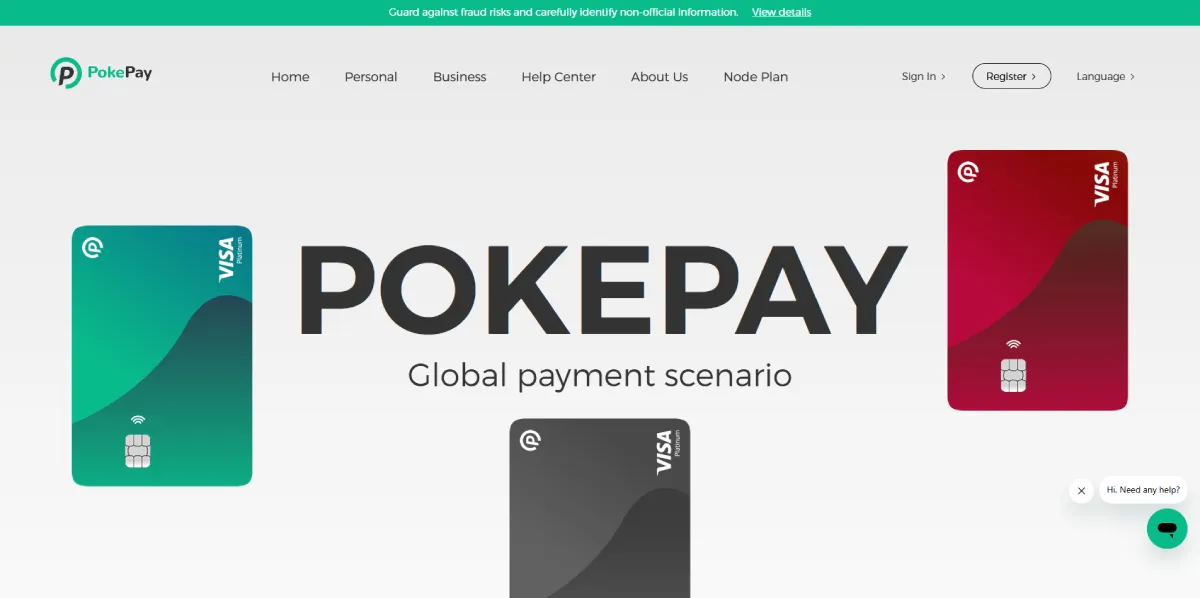
O PokePay é um cartão de débito virtual de baixo custo emitido em Hong Kong, projetado para gastos diários com criptomoedas. Ele opera na rede Visa e é aceito em mais de 100 países, tornando-se uma das opções mais acessíveis para detentores de criptomoedas fora dos EUA que desejam gastar USDT, USDC, BTC ou ETH sem precisar convertê-los para moeda fiduciária.
O cartão se destaca pela rápida adesão — um cartão virtual pode ser emitido em minutos com verificação mínima de identidade (KYC), e tanto o Apple Pay quanto o Google Pay são compatíveis desde o primeiro dia. Não há mensalidade nem anuidade, o que mantém o custo baixo para quem gasta ocasionalmente e não precisa de um alto volume de transações diárias.
A desvantagem é uma estrutura de taxas cumulativas: o PokePay cobra 1% em recargas e mais 1% em cada transação de gasto, resultando em um custo base efetivo de 2% por compra antes de qualquer conversão cambial. Para usuários ocasionais, isso é administrável, mas quem gasta com frequência sentirá o impacto se acumulando ao longo do tempo.
Ideal para: usuários de criptomoedas fora dos EUA que desejam um cartão virtual rápido e simples para compras online e por aproximação, com o mínimo de burocracia na configuração.

Por que considerar este cartão?
Ideal para
Usuários da região Ásia-Pacífico, freelancers e pessoas que migram de criptomoedas para outras plataformas e buscam um cartão de criptomoedas acessível e de nível básico, com ampla compatibilidade com plataformas e sem taxas recorrentes.
Principal vantagem
Ativação de cartão virtual a partir de apenas $5 (com códigos promocionais)
Coisas a saber
Taxa de ativação do cartão virtual padrão de $20 (códigos promocionais reduzem para ~$5–$7,20)
Entendendo o custo real de usar o PokePay
A estrutura de taxas do PokePay é simples no papel, mas vale a pena analisá-la na prática. A taxa de recarga de 1% e a taxa de gasto de 1% são cobradas separadamente, o que significa que uma única transação tem um custo base de 2% antes da conversão de moeda. Adicionando a taxa de câmbio de 1% para compras em moedas diferentes da moeda base, o custo efetivo chega a 3% por transação.
Para colocar isso em termos concretos: deposite $500 USDT e gaste em uma compra em moeda estrangeira, e você pagará $5 no depósito, $5 na transação e $5 na conversão cambial — $15 no total em uma compra de $500. Para compras ocasionais, isso é aceitável. Para uso semanal ou diário, o custo anual se torna significativo, algo que alternativas mais baratas evitam.
Se minimizar as taxas é sua prioridade, vale a pena comparar o PokePay diretamente com cartões que não cobram taxas de transação. Tevau A plataforma cobra aproximadamente 1% em recargas, mas zero em transações de gastos, e suporta limites diários muito mais altos — até $3.000.000, em comparação com o limite de aproximadamente $12.500 do PokePay. KazePay Além disso, não cobra taxas de transação e oferece suporte a uma gama mais ampla de redes blockchain, facilitando o carregamento a partir de várias blockchains sem se preocupar com a compatibilidade da rede.
Limites de gastos: Saiba antes de recarregar
O limite diário de gastos do PokePay, de HKD 100.000 (aproximadamente USD 12.500), é adequado para a maioria dos usos do consumidor — cobrindo despesas de viagem, assinaturas online, comércio eletrônico e compras do dia a dia em estabelecimentos comerciais. No entanto, é um dos limites diários mais baixos na categoria de cartões USDT.
Para usuários que precisam movimentar quantias maiores — como freelancers recebendo pagamentos por projetos, trabalhadores remotos cobrindo despesas comerciais ou comerciantes gerenciando volumes mais altos — o limite do PokePay criará atrito. Nesses casos, RedotPay Vale a pena conferir: suporta até 1.000.000 de transações por dia com verificação KYC completa, tornando-se a opção mais robusta para quem gasta muito com criptomoedas.
A PokePay não divulga publicamente seu limite de gastos mensais, por isso é importante esclarecer essa dúvida com a equipe de suporte antes de usar o cartão como seu principal meio de pagamento.
Quem NÃO deve usar o PokePay
O PokéPay é um bom cartão para iniciantes, mas não é a opção ideal para todos os usuários. Considere alternativas se alguma das seguintes situações se aplicar a você:
Você gasta com frequência ou em grandes quantidades. A estrutura de taxas cumulativas de 1% + 1% representa um custo real para usuários frequentes. Cartões com isenção de taxas de gastos permitem economizar dinheiro ao longo do tempo.
Você precisa de um limite diário acima de $12.500. O limite do PokePay vai interromper transações regulares de alto valor. Se você costuma gastar mais do que isso diariamente, o cartão se tornará um gargalo.
Você quer reembolso ou recompensas. O PokePay não possui um programa de cashback dedicado. Se ganhar dinheiro com seus gastos é importante para você, Ether.fi Cash oferece cashback de 2 a 3% em wETH, e Bybit Oferece até 10% para usuários elegíveis.
Você precisa de um cartão físico barato. Com um preço de $88, o cartão físico da PokePay está entre os mais caros desta categoria. O cartão físico da Bybit custa $5, e o da SafePal é gratuito — se você precisa de um cartão físico, essas são opções significativamente mais econômicas.
Você depende de redes blockchain específicas. A PokePay não documenta claramente quais redes (TRC20, ERC20, BEP20, etc.) são suportadas para recargas. Essa falta de transparência causou problemas de recarga para alguns usuários que enviaram ativos por meio de uma rede não suportada. Verifique com o suporte antes de transferir.
Você reside nos EUA, na Rússia ou no Iraque. O PokePay não está disponível nessas regiões.
Como o PokePay se compara a cartões similares
| PokePay | Tevau | KazePay | |
|---|---|---|---|
| Taxa de recarga | 1% | 1% | 1.8%–2.2% |
| Taxa de gastos | 1% | Livre | Livre |
| Taxa de câmbio | 1% | 1.2% | 1%–3% |
| Limite diário | ~$12,500 | $3,000,000 | $50.000–$250.000 |
| Custo do cartão físico | $88 | $100 | $100–$150 |
| Apple Pay | ✅ | ✅ | ✅ Somente virtual |
| Cashback | ❌ | Pontos | Reembolso 2% |
| KYC (virtual) | Mínimo | Mínimo | Mínimo |
A principal vantagem do PokePay sobre o Tevau e o KazePay é a integração mais rápida e o menor custo de ativação do cartão virtual. Suas principais desvantagens são a taxa de transação e o limite diário mais baixo. Para um ranking completo de cartões compatíveis com USDT, consulte nosso [link para o ranking]. Melhores cartões de débito USDT guia.
Como começar a usar o PokePay
Obter um cartão virtual PokePay leva menos de 10 minutos:
- Baixe o aplicativo PokePay no iOS ou Android.
- Cadastre-se com seu endereço de e-mail.
- Preencha o formulário KYC mínimo necessário — geralmente uma selfie e informações básicas de identidade.
- Pague a taxa única de ativação do cartão virtual $5.
- Faça recargas com USDT, USDC, BTC ou ETH (confirme a rede correta com o suporte primeiro).
- Adicione ao Apple Pay ou Google Pay e comece a usar imediatamente.
Para o cartão físico, é necessário realizar o KYC completo adicional e a entrega leva de 7 a 21 dias úteis, dependendo da sua localização.
Preços e taxas
| Custo do cartão virtual | $5 |
|---|---|
| Custo do cartão físico | $88 |
| Taxa anual | Livre |
| Taxa de recarga | Livre |
| Recarga mínima | $0 |
| Taxa de câmbio | 1% |
| Taxa de saque em caixa eletrônico | 2% |
| Taxa de conversão de criptomoedas | 1% |
| Taxa de substituição do cartão | $50 |
| Taxa de inatividade | $0 |
| Taxa de transação | 1% |
| Taxa de reembolso | Livre |
Limites
| Limite por transação | 100.000 HKD |
|---|---|
| Limite de gastos diários | 100.000 HKD |
| Limite de gastos mensais | desconhecido |
| Limite diário do caixa eletrônico | Saque máximo de HKD 5.000, podendo chegar a 5. |
| Limite mensal do caixa eletrônico | desconhecido |
| Recarregue até o limite mínimo. | 0,1 HKD |
| Recarregue até o limite máximo. | Ilimitado |
Características do cartão
| Cartão Virtual | Sim |
|---|---|
| Cartão físico | Sim |
| Apple Pay | Sim |
| Google Pay | Sim |
| Saque em caixa eletrônico | Sim |
| Programa de Recompensas | Sem programa de cashback dedicado; programa de indicação/nó com comissão de até 50% |
| Token de Cashback | Não |
| Benefício especial | Integração com Alipay e WeChat Pay de Hong Kong; suporte para PayPal, Wise, Netflix, Spotify e ChatGPT Plus; taxa internacional 0% para cartões emitidos em Hong Kong. |
| Reembolsos de assinatura | Não |
| Ganhos | Não |
| Controles do aplicativo móvel | Sim (bloqueio de cartão com um clique, ativação/desativação do 3DS, configurações de pagamento combinadas) |
| controles de segurança | 3D Secure (3DS), bloqueio de cartão com um clique, criptografia de dados, proteção CVV |
Atendimento ao Cliente
| Canais de suporte | Chat no aplicativo, e-mail, telefone, Telegram, portal de perguntas frequentes |
|---|---|
| Tempo de resposta | Em até 24 horas (por e-mail); suporte com velocidade de resposta variável e rápida. |
| Idiomas suportados | Chinês (principal), Inglês (Chinês tradicional como apoio) |
| Base de conhecimento | Sim — Perguntas frequentes e guias em pokepay.cc |
| Processamento de reembolsos | Reembolso padrão Visa: 3 a 7 dias úteis (estabelecimento) + 2 a 4 dias para processamento na rede Visa. |
| Avaliações de usuários | Trustpilot 3,7/5; Google Play 3,5/5 (185 avaliações, mais de 10 mil downloads); histórico limitado de avaliações independentes. |
| Pontuação de confiança | 3,7/5 (Trustpilot); regulamentado pela FINTRAC Canadá e VASP Polônia |
Faça seu pedido agora
| Tipo de cartão | Virtual ou presencial |
|---|---|
| Recarga mínima | Recarga mínima de 0,1 HKD; ativação do cartão virtual a partir de $5 |
| Tempo de aprovação | 10 minutos após o KYC |
| Oferta de bônus | Não |
| Prazo de entrega do cartão | Virtual: Instantâneo; Físico: 10 a 30 dias úteis (enviado da região da Grande Baía de São Francisco) |
| Aviso Regional | Visto emitido em Hong Kong; aplicam-se restrições a jurisdições (EUA, Rússia, Iraque e outras); Steam não é compatível; aplicativo iOS com restrição geográfica. |
Prós e contras
Prós
- Ativação de cartão virtual a partir de apenas $5 (com códigos promocionais)
- Sem taxas mensais, sem taxas anuais, sem taxas de microtransações.
- Aceita USDT, USDC, BTC e ETH para recarga.
- Compatível com Apple Pay e Google Pay.
- Funciona com Alipay, WeChat, PayPal, Wise, Netflix, Spotify e ChatGPT Plus.
- O cartão físico permite saques em caixas eletrônicos e pagamentos em pontos de venda (POS) em todo o mundo.
- 0% taxas transfronteiriças em cartões emitidos em Hong Kong
- Substituição gratuita do cartão em caso de validade padrão.
Contras
- Taxa de ativação do cartão virtual padrão de $20 (códigos promocionais reduzem para ~$5–$7,20)
- O cartão físico custa entre $88 e $99 (preços promocionais disponíveis).
- Taxa de recarga de 1% em todas as recargas de criptomoedas.
- 1% Taxa de câmbio para transações que não sejam em HKD
- Reclamações sobre a capacidade de resposta do serviço de atendimento ao cliente (Trustpilot 3,7/5)
- Algumas plataformas principais não são suportadas (ex: Steam)
- Aplicativo iOS voltado principalmente para a região dos EUA/Hong Kong — disponibilidade limitada em outros lugares.
- As jurisdições restritas incluem os EUA, a Rússia, o Iraque e outros países listados.
Veredicto final
O PokePay é um cartão de débito cripto acessível e descomplicado que cumpre o que promete: emissão rápida de cartão virtual, compatibilidade com Apple Pay e aceitação global da Visa, sem taxas mensais. Para quem usa um cartão cripto pela primeira vez ou para quem busca uma configuração rápida e sem processos complexos, ele oferece uma experiência realmente tranquila.
As limitações são reais, no entanto. A taxa cumulativa de recarga de 1% e a taxa de gastos de 1% criam um custo efetivo de 2 a 3% por transação, que se acumula rapidamente para usuários frequentes. O limite diário de aproximadamente $12.500 frustrará qualquer pessoa que movimente volumes significativos. E a ausência de um programa de cashback significa que você está pagando taxas sem receber nada em troca.
O PokePay se destaca como um cartão inicial, especialmente para usuários que priorizam velocidade e simplicidade em vez da otimização de tarifas. No entanto, vale a pena reavaliar sua escolha de cartão à medida que seu volume de gastos aumentar ou sua sensibilidade às tarifas se tornar mais evidente.
Se a redução dos custos de transação for sua prioridade, Tevau Não cobra taxas de transação e oferece limites diários significativamente maiores. Se você precisa de um limite maior com suporte a uma gama mais ampla de criptomoedas, RedotPay é a opção mais vantajosa para usuários que realizam grandes volumes de transações. E se ganhar cashback com seus gastos em criptomoedas for importante para você, Ether.fi Cash Oferece 2–3% em wETH com uma experiência de integração comparável.
Inscreva-se pelo UCardCrypto e receba sua recompensa.
Comece o seu PokePay Inscreva-se pelo UCardCrypto e desbloqueie uma recompensa garantida de UCard ao concluir as etapas elegíveis.
Compare com outro cartão
Avaliações de usuários
Ainda não há avaliações de usuários. Já usou este cartão? Sua avaliação ajuda outros leitores.
Escreva uma avaliação
Perguntas frequentes
Qual o preço do cartão virtual PokePay?
O cartão virtual PokePay custa aproximadamente 20 USDT para abrir, valor reduzido para cerca de 7,2 USDT com um cupom promocional. Não há taxas mensais ou anuais.
O PokePay é compatível com Apple Pay e WeChat Pay?
Sim. O PokePay é compatível com Apple Pay e WeChat Pay, além de recargas via Alipay, Taobao e Meituan — tornando-se um dos poucos cartões de criptomoedas que conecta simultaneamente os ecossistemas de pagamento asiáticos e internacionais.
Quais criptomoedas o PokePay aceita para recarga?
A PokePay aceita USDT, USDC, BTC e ETH para recargas de cartão.
O PokePay exige verificação KYC?
A PokePay oferece KYC em níveis. Os recursos básicos do cartão virtual são acessíveis com verificação mínima, e limites de gastos mais altos são desbloqueados após a conclusão completa do KYC.
Qual é o limite diário de gastos no PokePay?
O limite de gastos diários é de HK$ 1.000.000 (aproximadamente US$ 1.000). O valor cobre confortavelmente a maioria das necessidades do dia a dia.